The control centre
The control centre is a grid of blocks under one row of buttons. It opens with SUPER A, with a click on the island at rest or on its glance, or with the Control centre button if it is on the bar. The same key closes it, and so do Escape and a click anywhere off the island.
The top row
Section titled “The top row”Session actions on the left, doors on the right.
- Lock, Suspend, Log out, Restart, Shut down. Lock and Suspend run at once. The other three turn red on the first click and run on the second.
- Doors open another panel, or the settings window. Out of the box they are System statistics, Settings, Pet, Games, Notes and Task board.
Which doors are on the row, and in what order, is set under Settings → Control Centre → The top row: a switch for each, and two arrows to move the ones that are on. The doors on offer are System statistics, Settings, Pet, Games, Notes, Task board, Workspace overview, Launcher, Appearance, Session menu, Keys and Packages.
The grid
Section titled “The grid”Six columns by eight rows, and every block takes a whole number of cells. A cell is one toggle tile, wider than it is tall, so the square sizes are 1×2 and 2×4. Blocks never overlap, and a block can be on the grid more than once.
Out of the box: the toggles, the volume and brightness sliders and the wallpaper down the left; the player, the weather and the month in the middle; the notifications down the right.
| Block | Sizes (columns × rows) | What it holds |
|---|---|---|
| Toggles | 2×2, 2×3, 2×4, 3×2, 3×3, 4×2, 4×3 | Switches and one-press actions, in pages (below) |
| Volume | 2×1, 3×1, 4×1 | The output’s slider |
| Brightness | 2×1, 3×1, 4×1 | The screen’s slider |
| Appearance | 2×2, 2×3, 2×4, 3×3, 4×2 | The wallpaper; a click opens the appearance panel |
| Media | 2×2, 2×3, 3×2, 4×2 | The player |
| Weather | 2×1, 2×2, 2×3, 4×2 | The conditions now, and the rest of the day when there is room |
| Calendar | 2×3, 2×4, 3×4 | The month, a dot under each day with tasks; such a day turns into its list |
| Notifications | 2×4, 2×6, 2×8, 3×8 | The history, with Clear |
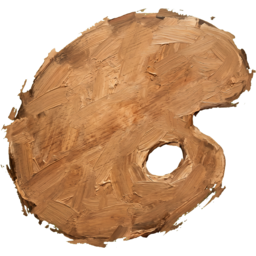
| impasto | 1×2, 2×2, 2×4 | The terminal greeting in miniature: the palette board and the machine’s lines |
| Pet | 2×2, 2×3 | The pet’s face and mood, feed and play; three rows add the shelf |
| Clock | 1×2, 2×2, 2×4 | The time over the day, larger with the room |
| Games | 2×1, 2×2 | The last best and Play; two rows, the last three games |
| Notes | 1×2, 2×2, 2×4 | The front note of the deck; a click opens it |
| Tasks | 1×2, 2×2, 2×3, 2×4 | How many are left and what is next; larger, the next few with Open |
A block with nothing to show — the player with no music — draws its empty card rather than leaving the cell.
The toggles
Section titled “The toggles”One block, in pages. A page is what fits the block; the rest go on further pages, turned with the wheel, a sideways drag, the arrows or the dots along the bottom. The six out of the box are Wi-Fi, Bluetooth, Power, Focus, Microphone and Airplane.
| Tile | What it does |
|---|---|
| Wi-Fi | Switches the radio. Its arrow opens the Wi-Fi list. |
| Bluetooth | Switches Bluetooth. Its arrow opens the device list. |
| Power | Switches the power profile between balanced and performance; lit on performance |
| Focus | Do not disturb — notifications stay off the island |
| Microphone | Mutes the microphone |
| Airplane | Wi-Fi and Bluetooth off together, or back on |
| Night light | A warmer screen, through hyprsunset; the temperature is under Settings → Displays → Night light |
| Output | Mutes the sound |
| Dock | Shows or hides the dock |
| Notch | Cuts the island into the top edge, or floats it |
| Shadows | Shadows on the windows |
| Capture | Opens the capture surface on its last choices |
| Annotate | A region, straight into satty |
| Read text | A region, read as text onto the clipboard |
| Colour | The colour of one pixel, onto the clipboard |
| Record | Starts or stops a recording |
| Clear clipboard | Empties the clipboard history; only there while something is kept |
The last six close the panel first, so it is not in the picture. A tile the machine cannot do — no Bluetooth adapter, no satty, no hyprpicker — is dimmed and does nothing.
The Wi-Fi list shows the networks in range with their signal, which are secured and which are saved, a Rescan and the switch. A click on a secured network opens a password field in its row. The Bluetooth list shows the devices that have a name, and anything paired or connected; the unnamed ones are folded under a line at the bottom. A click connects. Both lists also open from the Network and Bluetooth pieces on the bar.
Arranging
Section titled “Arranging”-
Right-click the control centre’s background, or open Settings → Control Centre and press Edit. The grid’s cells show, and a card of every block, each at the smallest size it offers, opens under the island.
-
Drag a block from the card onto a cell, or drag a block on the grid to move it. The cell it will land on lights before you let go. A click on a block on the card puts it in the first free place.
-
Pull a block’s corner, or scroll over it, to step through the sizes it offers.
-
Take a block off with its ⊖ badge, or by dropping it on the card.
-
Click a block for its card: its name, Remove, and its sizes. On a toggles block the card lists every tile with a tick, and arrows to order the ones ticked — so two toggles blocks can carry two different sets.
-
Press Escape, right-click the background again, or close the panel. A second Escape closes the island.
The card of blocks moves, grows and scrolls as the desktop’s does (Arranging the desktop).
Default layout, beside Edit in the settings, puts the grid back as it came.