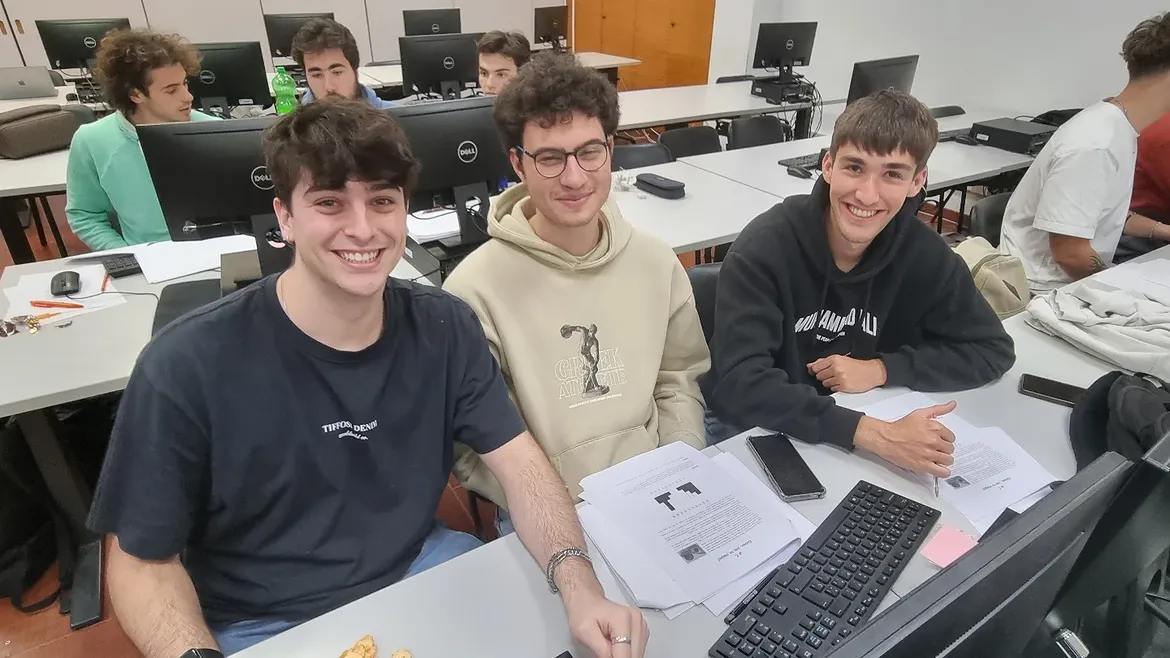
I didn’t expect my first programming contest to be something I’d immediately want to do again. Five hours in front of a single keyboard, a stack of problems we’d never seen, and two teammates trying to think in the same direction as me — on paper it sounded like it could go either really well or really badly. It went somewhere in between, and I loved it.
This is a short recap of the Ada Byron XII regional, held on March 25, 2026, and my first time competing.
Signing up almost by accident
We didn’t plan this months in advance. The three of us had talked, half-jokingly, about “doing one of those contests someday,” and then a deadline appeared and we just went for it. None of us had any real competitive programming background — we knew how to code, but solving problems against the clock, as a team, sharing one machine, is a completely different sport.
The team: Claude, Codex and Gemini
We competed for the Universitat de les Illes Balears under the name “Claude, Codex and Gemini.” Yes — named after the AI assistants. It started as a joke and stuck, and honestly it made the scoreboard a little more fun to look at.
Preparing (and over-preparing)
In the weeks before the contest we grinded problems on Acepta el Reto and put together a dossier of algorithms, data structures and notes we thought we might need. In hindsight, we spent too much energy on the dossier. When the pressure was on, the only pieces we actually reached for were a handful of code templates — fast I/O, a couple of standard structures, some boilerplate. The forty pages of theory barely got opened.
Lesson number one: templates you can paste and trust beat a beautiful reference you don’t have time to read.
Contest day
Ada Byron follows the ICPC format: teams of three, one computer, five hours, and around a dozen problems ranging from “read it and smile” to “read it and quietly panic.” The rhythm is its own challenge — you’re constantly deciding who codes, who reads the next statement, and which problem is actually worth attacking right now.
We solved three problems. It doesn’t sound like much next to the top teams, but getting that first Accepted to pop up on the screen, as a team, under the clock, is a feeling I wasn’t ready for. One small thing I’m quietly proud of: our three solutions came with a low penalty, so we weren’t just guessing our way through them.
Where we landed
We finished 32nd out of 67 teams (full standings here). Right in the middle of the pack, which for a first attempt with zero experience felt completely fair. The top of the table was on another level — the winning team cleared twelve problems — and seeing that gap up close was more motivating than discouraging. It’s a very concrete picture of how much room there is to grow.
What I took away
A few things I’ll carry into the next one:
- Practice implementation speed, not just theory. Knowing an algorithm and coding it correctly in ten nervous minutes are different skills.
- Team roles matter. Time lost to “wait, who’s typing?” is time you don’t get back.
- Start with the easy problems, fast. Momentum and a clean early solve change the whole run.
More than anything, the contest turned something I barely knew about into something I genuinely want to get good at. We already agreed on the important part: next year we come back, and we come back prepared.